

AI Tips and Learnings
Understanding Transformer Architecture in Plain English
This article demystifies Transformer architecture, explaining its key components and their significance in AI, focusing on natural language processing.
Discover insightful tips and learnings about artificial intelligence.
This article demystifies Transformer architecture, explaining its key components and their significance in AI, focusing on natural language processing.

Large language models (LLMs) are transforming technology by enabling applications like chatbots and content generation. This article explores their architecture and functionality.

Explore the genuine trends shaping generative AI as it transforms industries and enhances creativity, devoid of unnecessary hype.

Explore the principles of responsible AI use, focusing on ethics, privacy, bias, and verification for professionals.

Explore the transformative role of embeddings and vector search in artificial intelligence applications.

Explore the critical trade-offs between open-weight and closed models in AI development, including transparency, customization, and collaboration.

Explore how AI agents adapt and utilize tools for enhanced problem-solving and productivity.

Explore the key concepts of tokenization and context windows in AI, and understand the length limits and their implications.

Explore how multimodal AI integrates text, images, and voice for enhanced user experiences. Delve into its applications and future implications.

Explore the differences and applications of fine-tuning and in-context learning in AI to optimize model performance effectively.

Explore key concepts of AI safety and alignment, their significance, and implications for technology's future. Learn why these areas are crucial for responsible AI development.

Explore the crucial aspects of evaluating AI models, including benchmarks, hallucinations, and inherent limitations in artificial intelligence technologies.

Explore the groundbreaking diffusion models transforming AI image generation, mimicking thermodynamic processes to create high-quality visuals.

Learn the fundamentals of prompt engineering to enhance AI interactions and achieve better outputs.

Explore Retrieval-Augmented Generation (RAG) and understand its significance in AI. Discover why context enhances communication and decision-making.

Discover the essentials of transformer architecture, a revolutionary model in AI, and understand its components like the encoder and decoder.

Explore how Large Language Models (LLMs) work and their transformative impact on various industries, from content creation to education.

Explore the genuine trends in generative AI without the hype, from ethical considerations to innovations in technology.

This article explores the vital aspects of responsible AI use, focusing on privacy, bias, and verification to ensure ethical practices in AI deployment.

Explore how embeddings and vector search are revolutionizing AI applications, enhancing search relevance and efficiency.

Explore the differences between open-weight and closed models in AI, weighing their pros and cons to aid builders in decision-making.

Explore how AI agents use tools to perform autonomous tasks and the implications of their actions. Discover the key characteristics and challenges of AI tool use.

Explore the fundamental concepts of tokenization and context windows in AI, and understand the reasons behind length limits in language models.

Explore how multimodal AI integrates text, images, and voice for intuitive human-machine interactions. Discover its applications, benefits, and future trends.

Explore the differences between fine-tuning and in-context learning in AI, and discover when to effectively use each approach.

Explore the critical concepts of AI safety and alignment, their definitions, and significance in ensuring technology benefits humanity.

Explore how to evaluate AI models, focusing on benchmarks, hallucinations, and their limits.

Discover the transformative power of diffusion models in AI image generation. Learn how they reverse noise into high-quality images.

Discover the essential principles of prompt engineering to improve AI outputs effectively. Learn how to craft effective prompts for various applications.

Explore how Retrieval-Augmented Generation (RAG) enhances AI by leveraging context for improved outputs.

Discover transformer architecture, its crucial components, and how it shapes AI's NLP landscape in this accessible overview.

Explore the fascinating world of large language models (LLMs), their functions, applications, and future implications in AI.

Explore the transformative trends of generative AI across various industries without the usual hype. Understand its real implications and future direction.

Explore the essential aspects of responsible AI, focusing on privacy, bias, and verification for ethical technology usage.

Explore the importance of embeddings and vector search in AI, including their applications and benefits. Understand how they enhance machine cognition.
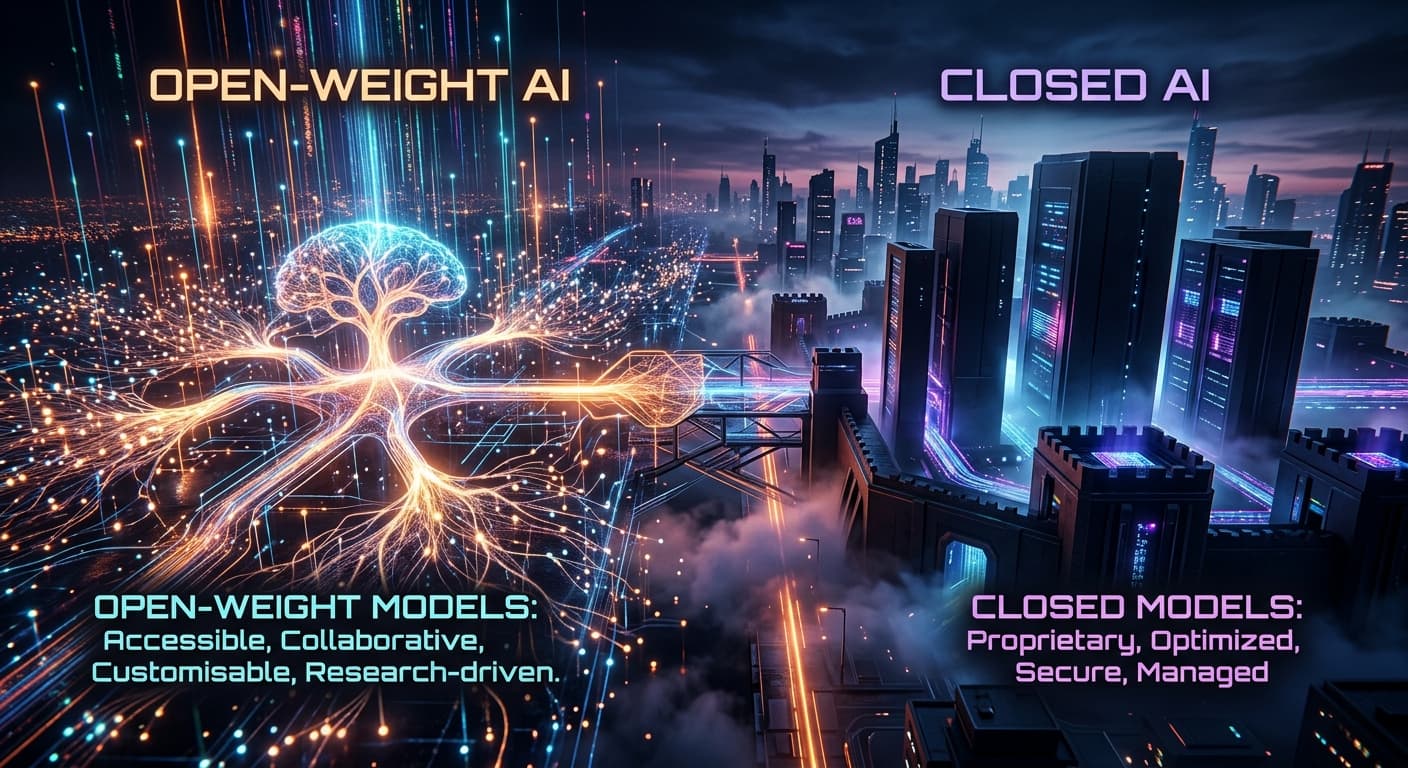
Explore the trade-offs between open-weight and closed models in AI development, understanding their advantages and challenges for builders.

Explore how AI agents function and use tools to perform tasks, adapting and learning from their environments.

Discover how tokenization and context windows in AI affect language processing and impose length limits on models.

Discover how multimodal AI integrates text, image, and voice inputs to enhance user experience and accessibility across various industries.

Explore the differences between fine-tuning and in-context learning in AI, and discover when to effectively use each method for optimal results.

Explore the critical concepts of AI safety and alignment, emphasizing their importance in ensuring AI systems align with human values.

Explore the evaluation of AI models through benchmarks, understand hallucinations, and recognize their limitations to ensure effective and reliable AI systems.

Explore how diffusion models revolutionize AI image generation. Understand their mechanics and applications in various fields.

Explore the fundamentals of prompt engineering to enhance AI interaction and output quality.

Retrieval-Augmented Generation (RAG) combines retrieval systems with generative models, improving AI's response accuracy and relevance.

Explore how transformer architecture revolutionizes AI with its fundamental components and applications. Learn about its significance in NLP and beyond.

Large Language Models (LLMs) are advanced AI systems that understand and generate human-like text. Learn about their features and applications across industries.

Explore the realistic trajectory of generative AI, focusing on key trends shaping its development and integration across sectors.

Explore the key concerns of responsible AI use, including privacy, bias, and the importance of verification in ethical AI deployment.

Explore how embeddings and vector search techniques enhance AI applications by simplifying data representation and improving search accuracy.