How AI Image Generation Works: Diffusion Models Explained
How AI Image Generation Works: Diffusion Models Explained
Artificial Intelligence (AI) has made remarkable strides in recent years, particularly in the field of image generation. One of the most revolutionary approaches to creating images through AI is the use of diffusion models. This article dives into the mechanics of diffusion models, their significance in the realm of generative AI, and how they are transforming creative processes.
Understanding Diffusion Models
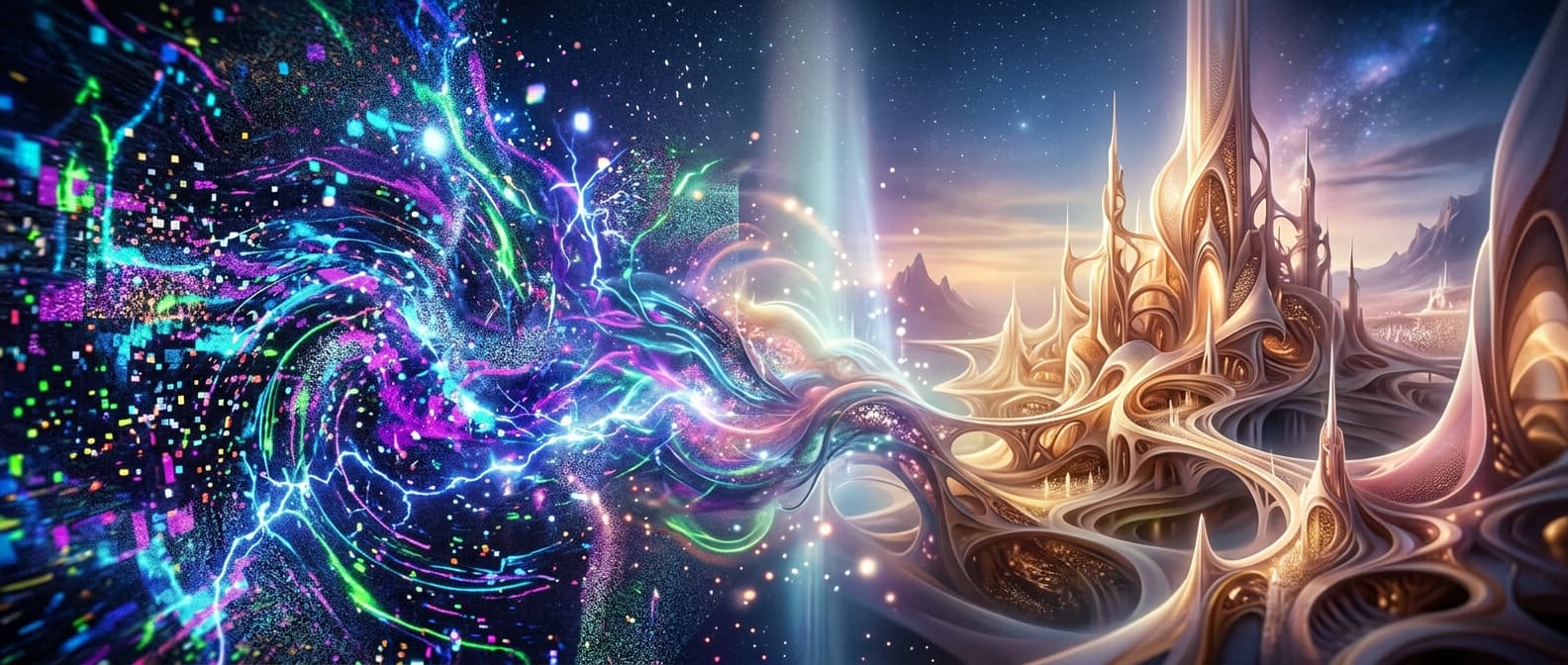
Diffusion models are a class of generative models that create images by progressively refining random noise into coherent images. Unlike traditional generative adversarial networks (GANs), which use a pair of networks (a generator and a discriminator), diffusion models operate on a simpler principle that involves the gradual denoising of data.
The Basic Concept
At the core of diffusion models is the concept of a noisy image that is progressively refined to produce a clear output. The process can be divided into two main phases:
- Forward Process: This phase involves adding noise to the image iteratively until it becomes a random noise distribution. Essentially, the model learns to corrupt the image gradually.
- Reverse Process: Here, the model learns to denoise the image step by step, effectively reversing the noise addition process and reconstructing the original image.
This back-and-forth process enables the model to generate high-quality images from random inputs, showcasing the power of AI in creative applications.
The Mechanics of Diffusion Models
1. Training Phase
During the training phase, the model learns how to apply noise to images and subsequently how to remove it. This involves:
- Dataset Preparation: A diverse dataset of images is required for the model to learn the various structures, textures, and colors present in real-world images.
- Noise Addition: The model systematically adds noise to the images, creating a series of increasingly noisy images that serve as training examples.
- Learning Denoising: The model is trained to predict the original image from its noisy counterpart, learning how to reverse the noise addition process effectively.
2. Inference Phase
Once trained, the model can generate images through the inference phase:
- Starting with Random Noise: The generation begins with a random noise input.
- Iterative Denoising: The model applies its learned denoising process iteratively, refining the noise into a coherent image.
- Final Output: After several iterations, the model outputs a high-fidelity image that resembles the types of images it was trained on.
Advantages of Diffusion Models
Diffusion models offer several advantages over traditional generative models:
- High Image Quality: They produce images that are often more realistic and detailed compared to those generated by GANs.
- Stability in Training: Diffusion models tend to be more stable during the training process, making them easier to work with.
- Flexibility: They can be adapted for various tasks, including inpainting, super-resolution, and even video generation.
Applications of Diffusion Models
The applications of diffusion models are vast and varied. Here are some notable examples:
- Art and Design: Artists and designers are leveraging diffusion models to create unique artworks, concepts, and designs that push the boundaries of creativity.
- Gaming: Game developers utilize these models to generate realistic textures and environments, enhancing the visual fidelity of their games.
- Advertising: Marketers use AI-generated images to create compelling visuals for campaigns, saving time and resources while allowing for creative experimentation.
Key Takeaways
- Diffusion models are a groundbreaking approach to AI image generation that progressively refines random noise into coherent images.
- The process involves a training phase to learn noise addition and denoising, followed by an inference phase for image generation.
- These models offer advantages such as high image quality, training stability, and flexibility across various applications.
FAQ
What are diffusion models?
Diffusion models are generative AI models that create images by adding noise and then progressively denoising it to generate high-quality images.
How do diffusion models differ from GANs?
Unlike GANs, which use a generator and discriminator, diffusion models focus on the iterative process of noise addition and removal for image generation.
What are some practical applications of diffusion models?
They are used in art, design, gaming, and advertising, among other fields, to create realistic and creative visuals.
In conclusion, diffusion models represent a significant advancement in AI image generation. Their ability to produce high-quality images through a refined process of noise management showcases the potential of generative AI in various sectors. As we continue to explore the capabilities of AI, tools like Clever AI will play a pivotal role in shaping our understanding and application of these technologies.