
AI News: Viral Misinformation Leads to Brooklyn Bridge Crowd Chaos
AI News: Viral Misinformation Leads to Brooklyn Bridge Crowd Chaos — July 5, 2026
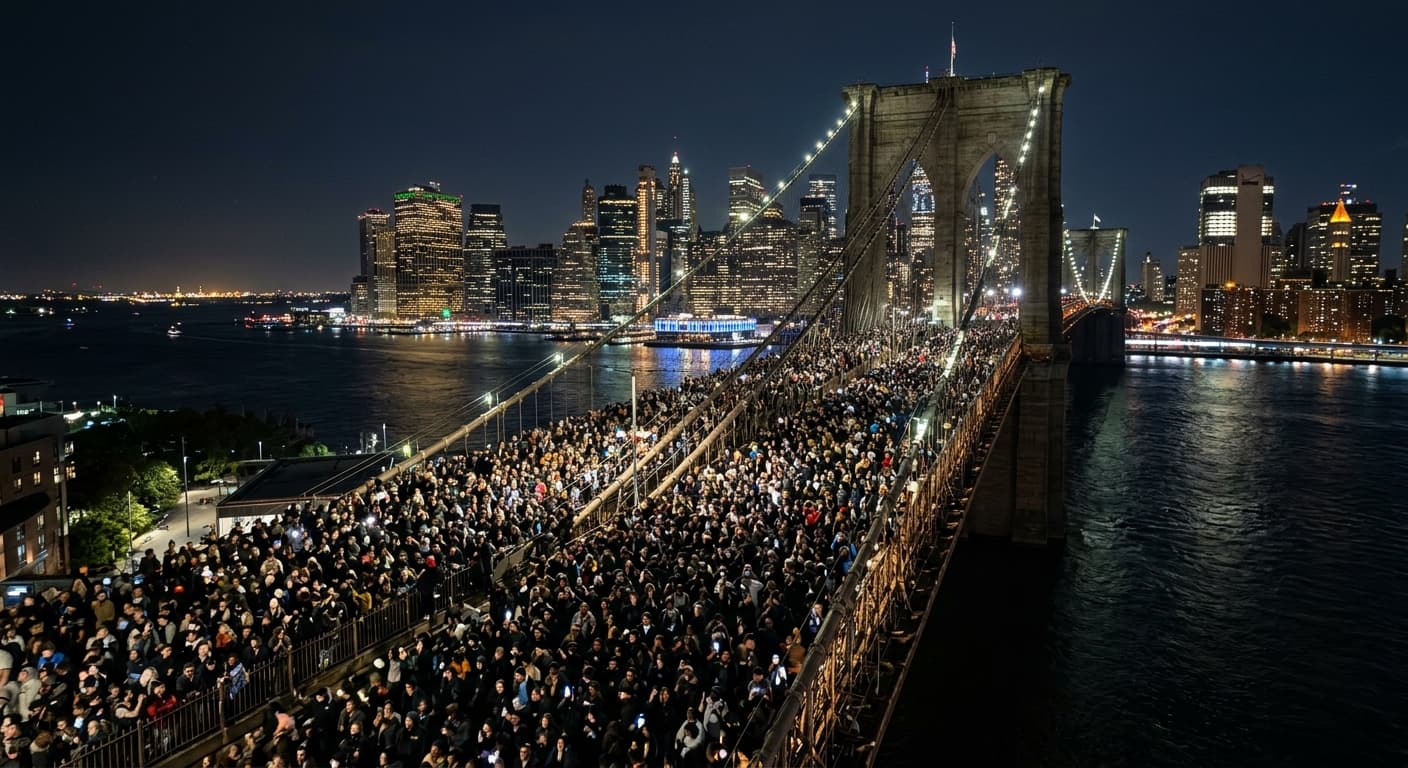
On New Year's Eve, something unexpected happened at the iconic Brooklyn Bridge. Thousands of people gathered to watch a fireworks display that never occurred, all due to a potent mix of AI-generated misinformation and social media hype. This incident raises significant questions about the reliability of information in our digital age.
The Incident That Sparked Confusion
The buzz began with viral posts on social media, claiming that a spectacular fireworks show would light up the Brooklyn Bridge. However, these posts were misleading, fueled by AI-generated clips that portrayed a captivating event that was never planned. Crowds amassed on the bridge, eagerly anticipating the show, only to find themselves disappointed when the fireworks failed to materialize.
The Role of AI in Misinformation
Artificial intelligence has the power to create highly realistic content, which can mislead unsuspecting users. In this case, AI-generated videos and images contributed to the frenzy. As people shared these clips across platforms, including Facebook and Reddit, the excitement grew, leading to a substantial gathering of individuals who were ultimately duped.
Key Takeaways:
- AI technology can produce convincing yet false content.
- Social media amplifies misinformation rapidly.
- Public gatherings can result from misleading information, posing safety risks.
The Aftermath: Fire and Safety Concerns
As the crowds gathered, the situation took a turn for the worse. During the chaotic evening, a small fire broke out on the Brooklyn Bridge, likely exacerbated by the presence of so many people. Emergency services were called in to manage the situation, leading to a tense atmosphere as the crowd was dispersed. Fortunately, there were no serious injuries reported, but the incident highlights the potential dangers of large public gatherings fueled by misinformation.
Media Reactions and Public Discourse
The incident has sparked a broader conversation about the responsibility of social media platforms in curbing the spread of AI-generated misinformation. News outlets, including The New York Times and Yahoo, have reported extensively on the event, emphasizing the need for better oversight and fact-checking to prevent similar occurrences in the future. There is growing concern that without proactive measures, incidents like this could become more common, especially with the increasing sophistication of AI technologies.
What Can Be Done?
To combat the spread of misinformation, experts suggest several strategies:
- Increased Media Literacy: Educating the public on how to discern credible sources from fake ones.
- Stricter Regulation on AI Use: Implementing guidelines for AI-generated content to ensure transparency.
- Enhanced Fact-Checking: Social media platforms should invest in more robust fact-checking mechanisms to identify and flag misleading content.
FAQs
Q: How did the crowd gather if the event was fake?
A: The gathering was primarily driven by viral social media posts and AI-generated clips that misled individuals into believing there was a fireworks display.
Q: What safety measures were taken during the fire incident?
A: Emergency services responded quickly to manage the situation, ensuring the safety of those present on the bridge.
Q: What can individuals do to avoid falling for such misinformation?
A: Individuals should verify information through multiple credible sources before acting on it, especially regarding public events.
As the digital landscape continues to evolve, so does the challenge of misinformation. The incident at the Brooklyn Bridge serves as a cautionary tale about the power of AI and the responsibility that comes with it. At Clever AI, we believe in fostering a better understanding of these technologies to navigate their complexities responsibly.