
AI News: Thousands Misled at Brooklyn Bridge — July 5, 2026
AI News: Thousands Misled at Brooklyn Bridge — July 5, 2026
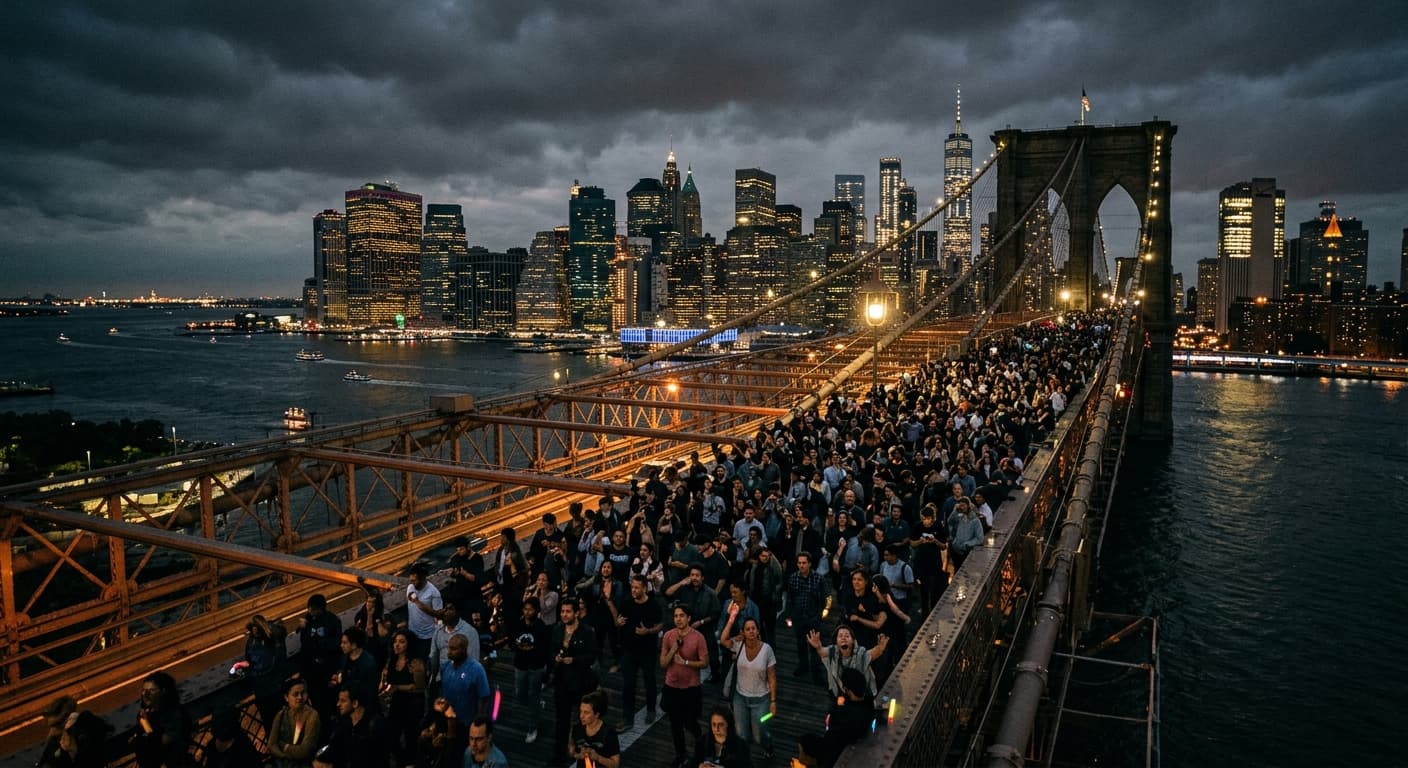
In a startling incident that underscores the power of artificial intelligence and social media, thousands gathered at the Brooklyn Bridge on New Year's Eve, believing they were part of a spectacular fireworks display. Instead, they were met with disappointment as no event was taking place. This situation raises crucial questions about the influence of AI-generated content and misinformation in our digital age.
The Event That Went Wrong
On December 31, 2025, a viral post spread rapidly across social media platforms, claiming that an extravagant fireworks show would be held at the Brooklyn Bridge. The post, which featured AI-generated visuals of fireworks lighting up the skyline, attracted a massive crowd, leading to long lines and an atmosphere of excitement. However, as the night unfolded, it became clear that the event was a hoax, leaving many attendees frustrated and confused.
The Role of AI and Social Media
This incident reflects a growing trend where AI-generated content can easily mislead the public. With the rise of generative AI tools, creating convincing visuals and narratives has never been easier. In this case, AI-generated images combined with viral social media posts created a perfect storm of misinformation, drawing in crowds that were eager for entertainment.
Key Takeaways:
- AI-generated content can mislead large groups of people.
- Social media platforms play a significant role in spreading misinformation.
- The incident highlights the need for critical thinking in the digital age.
Lessons Learned from the Brooklyn Bridge Incident
The chaotic scene at the Brooklyn Bridge serves as a wake-up call about the implications of AI in our daily lives. While technology can enhance our experiences, it also poses risks. Misinformation can spread rapidly, leading to real-world consequences. This incident emphasizes the importance of verifying information before acting on it, especially when it involves public gatherings.
How AI Miscommunication Happens
The miscommunication surrounding the Brooklyn Bridge fireworks can be attributed to several factors:
- Influencer Impact: Influencers and public figures sharing AI-generated content can lend credibility to false information.
- Algorithm Amplification: Social media algorithms often prioritize engaging content, regardless of its truthfulness.
- Public Trust: As people increasingly rely on social media for news, they may overlook the importance of fact-checking.
Moving Forward: Strategies for Misinformation Prevention
To combat the spread of misinformation fueled by AI, individuals and organizations can adopt the following strategies:
- Education: Increasing awareness of AI-generated content and its potential to deceive.
- Fact-Checking: Encouraging the use of fact-checking tools before sharing information.
- Responsible Sharing: Promoting a culture of responsible sharing, where individuals think critically about the content they disseminate.
Key Takeaways:
- Education and awareness are crucial in combating misinformation.
- Fact-checking tools should be used before sharing information.
- A culture of responsible sharing can mitigate the spread of falsehoods.
FAQs
Q: How did the misinformation about the Brooklyn Bridge fireworks spread? A: It spread through viral social media posts featuring AI-generated visuals, leading to large crowds gathering in anticipation of a non-existent event.
Q: What role does AI play in misinformation? A: AI can create convincing content that may mislead people, especially when combined with social media's rapid information dissemination.
Q: What can individuals do to prevent falling for misinformation? A: Individuals should verify information through reliable sources and be cautious about sharing unverified content.
In reflecting on the Brooklyn Bridge incident, it becomes clear that while AI has tremendous potential, it also requires a vigilant and educated public to navigate its complexities. As we continue to engage with these technologies, platforms like Clever AI are dedicated to fostering awareness and understanding of AI's impact on society.