
AI News: Autonomous Fighter Jets and Military Advancements — May 30, 2026
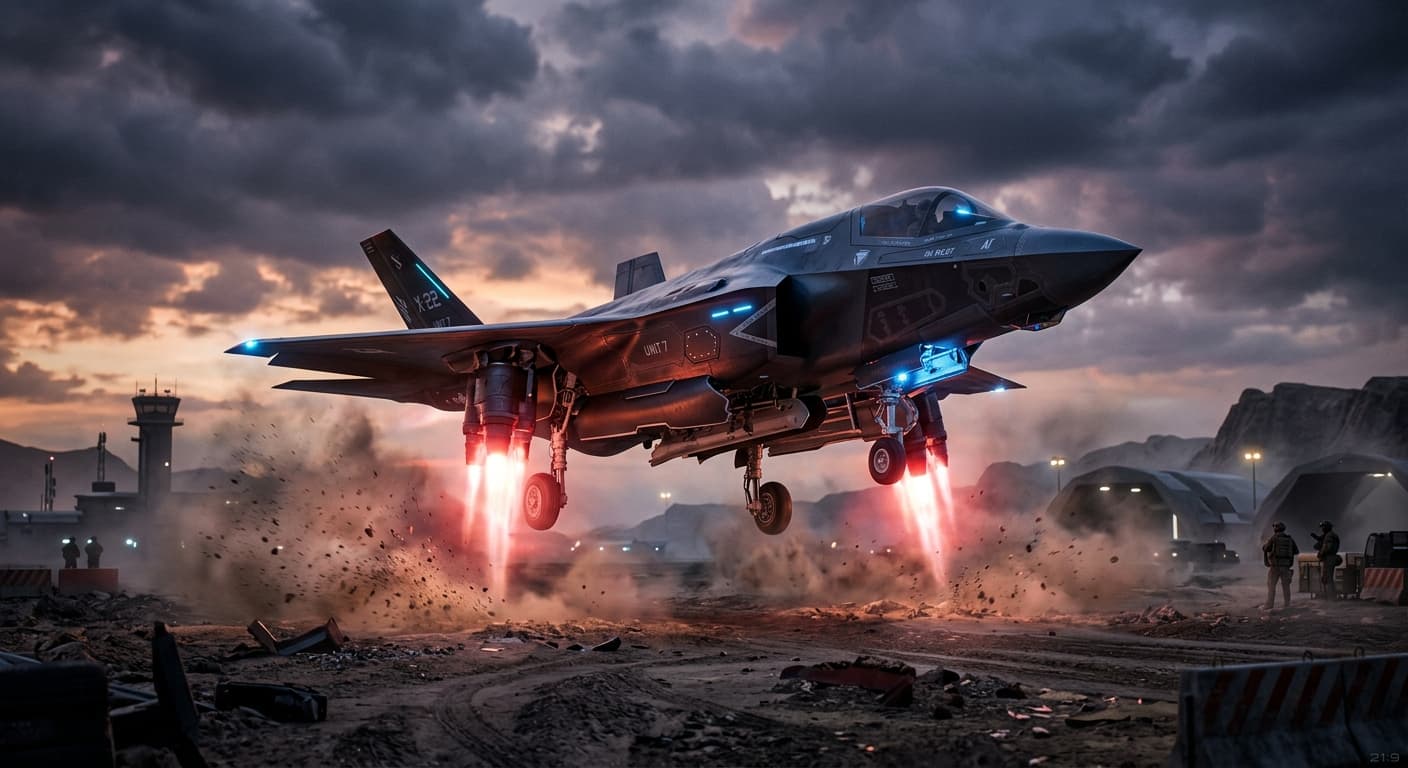
AI News: Autonomous Fighter Jets and Military Advancements — May 30, 2026
The military landscape is evolving rapidly, with advancements in artificial intelligence (AI) leading the charge. Recent developments highlight the implementation of AI in military aviation, particularly with the unveiling of fully autonomous fighter jets. This shift not only promises to enhance operational efficiency but also raises critical questions regarding the future of warfare.
The Rise of AI-Piloted Fighter Jets
In October 2025, Shield AI introduced the world to its latest innovation: a fully autonomous vertical takeoff and landing (VTOL) fighter jet, known as the X-Bat. This aircraft is designed to operate without the need for a human pilot, utilizing advanced AI algorithms to navigate and execute missions independently. The implications of such technology are profound, as it could significantly reduce the risk to human life in combat situations while increasing operational capabilities.
Military Implications of AI Technology
As nations ramp up their military capabilities through AI, the strategic balance of power is shifting. The ability to deploy autonomous fighter jets allows for rapid response times and the execution of complex missions without the need for direct human oversight. This development comes in response to emerging threats, particularly from countries like China, which have been actively enhancing their military technology to counter U.S. capabilities.
- Key Takeaways:
- The Shield AI X-Bat fighter jet operates autonomously.
- AI technology is reshaping military strategies globally.
- Nations are investing in AI to maintain strategic advantages.
Countering Threats: The U.S. Response
In light of China's advancements, the U.S. military is doubling down on its investment in AI technology for defense. Reports indicate that the U.S. is developing strategies to counter potential threats to its infrastructure, including runways that could be targeted in a conflict. The introduction of AI fighter jets like the X-Bat is part of a broader strategy to ensure that the U.S. maintains its edge in aerial combat capabilities. These jets are expected to outperform traditional models by leveraging AI to outsmart enemy tactics and respond to threats in real-time.
The Technology Behind the X-Bat
The technology that powers the Shield AI X-Bat is derived from previous advancements in autonomous vehicles and drones. The aircraft is equipped with sophisticated sensors and machine learning algorithms that allow it to learn from its surroundings and adapt to changing conditions. This capability enables the X-Bat to execute complex maneuvers and make decisions on the fly, which is crucial in high-stakes combat scenarios.
Future Prospects for Autonomous Military Aircraft
The development of AI in military aviation is only just beginning. As countries continue to invest in research and development, we can expect to see even more sophisticated autonomous systems emerge. These advancements could redefine aerial warfare, leading to a new era where human pilots are no longer the primary operators of fighter jets. This shift raises ethical questions about the role of AI in warfare and the potential for autonomous systems to make life-and-death decisions without human intervention.
- Key Takeaways:
- The X-Bat uses advanced sensors and machine learning for decision-making.
- The future may see a decrease in human pilots in combat roles.
- Ethical considerations regarding AI in warfare are becoming increasingly important.
FAQs
Q: What is the X-Bat? A: The X-Bat is a fully autonomous VTOL fighter jet developed by Shield AI that operates without a human pilot.
Q: How does AI enhance military capabilities? A: AI improves response times, operational efficiency, and the ability to execute complex missions without direct human oversight.
Q: What are the ethical implications of AI in warfare? A: The increasing role of AI raises concerns about decision-making in combat scenarios and the potential for autonomous systems to operate without human intervention.
As we look ahead, the integration of AI into military operations will likely continue to evolve, presenting both opportunities and challenges for global security. At Clever AI, we are committed to exploring these advancements and their impact on various sectors, including defense.